
I went on a week’s trip to Vancouver and Pitt River to accompany my husband fly fishing. Vancouver remains a seductively attractive city in June! Lovely temperatures, nice ocean breeze, trees fully leafed out, flowers that can’t easily grow in Southern California due to the lack of rain and general moisture, a great urban fabric and lots of good food. While there are rather imposing high apartment towers in clusters in various neighborhoods, a lot of the city is residential, and in the more core area, that residential retains vibrant commercial streets with apartments above the commerce. And it works. I think for a couple of reasons, one the scale is fairly modest, 2, maybe 3 story buildings and probably more affordable rent, and the city has walkability. Somehow the boulevards aren’t kill zones like they are in Los Angeles, and people are out. Because of the long standing Asian influx, there are many Asian restaurants and grocery stores, but also so much more. This time of year, moving to Vancouver is just so tempting. Of course, the real estate prices are astronomical and modest income people have moved out to the satellite towns, that also host clusters of high rise apartment buildings. The city and region are knitted together by bus transit, but there are lots of cars. I will say though that the oysters were spectacular!
The Pitt River is only about an hour outside of Vancouver. One drives to Pitt Lake, fed by the Pitt River, one of the only tidal lakes in the Americas (or so we were told), as the Pitt River empties into the Fraser River which then empties into the ocean. The Pitt River is, one say, interrupted by this big, very deep lake in a glacial bowl. There are enormous sturgeon in the lake! So as the tides come in, the fresh water is pushed inland. For the fishing, the owner of the fishing lodge comes in his boat and picks up guests at the far end of the lake, there is a 40 minute cruise up lake to the place the river empties into the lake.
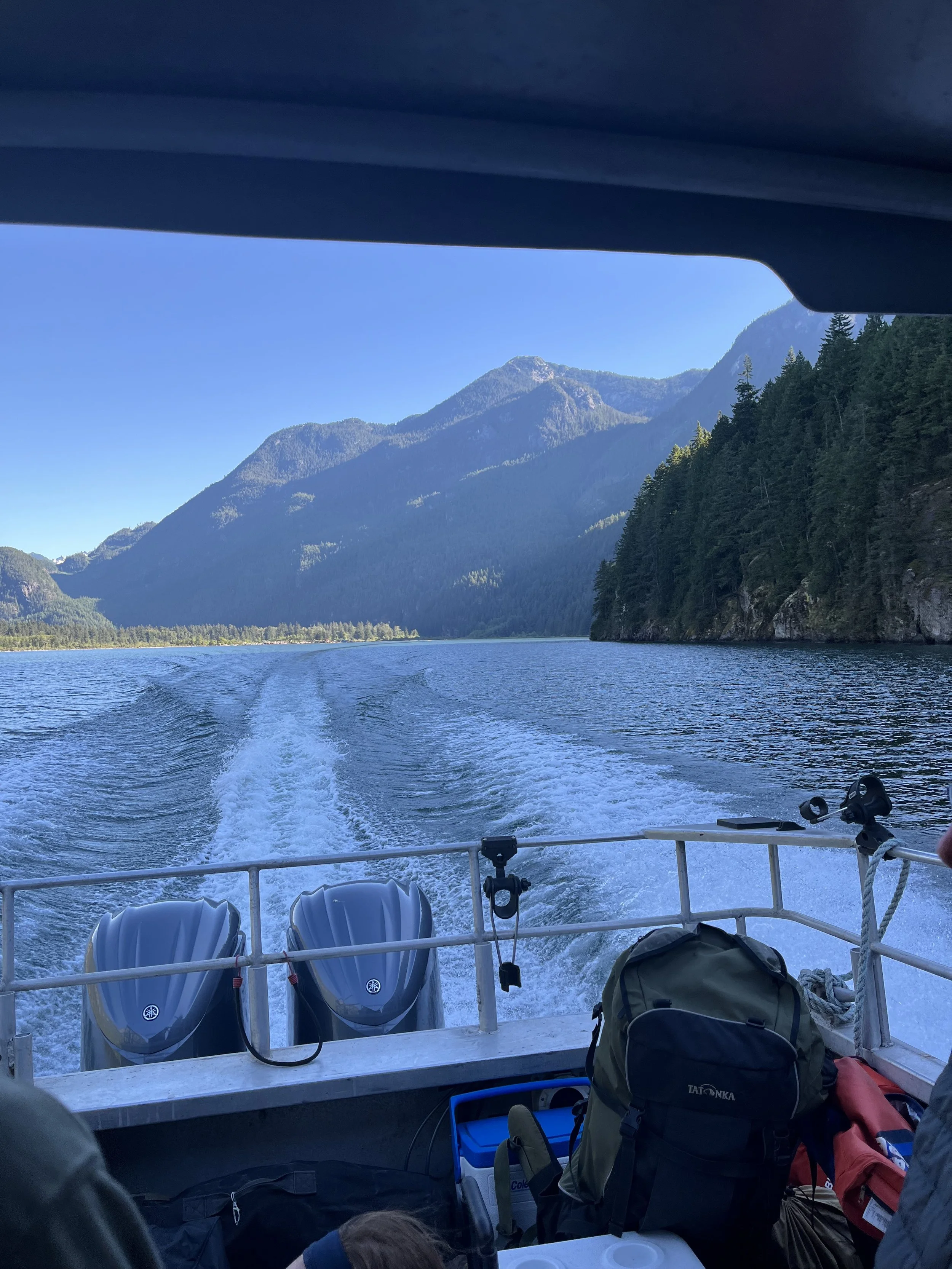
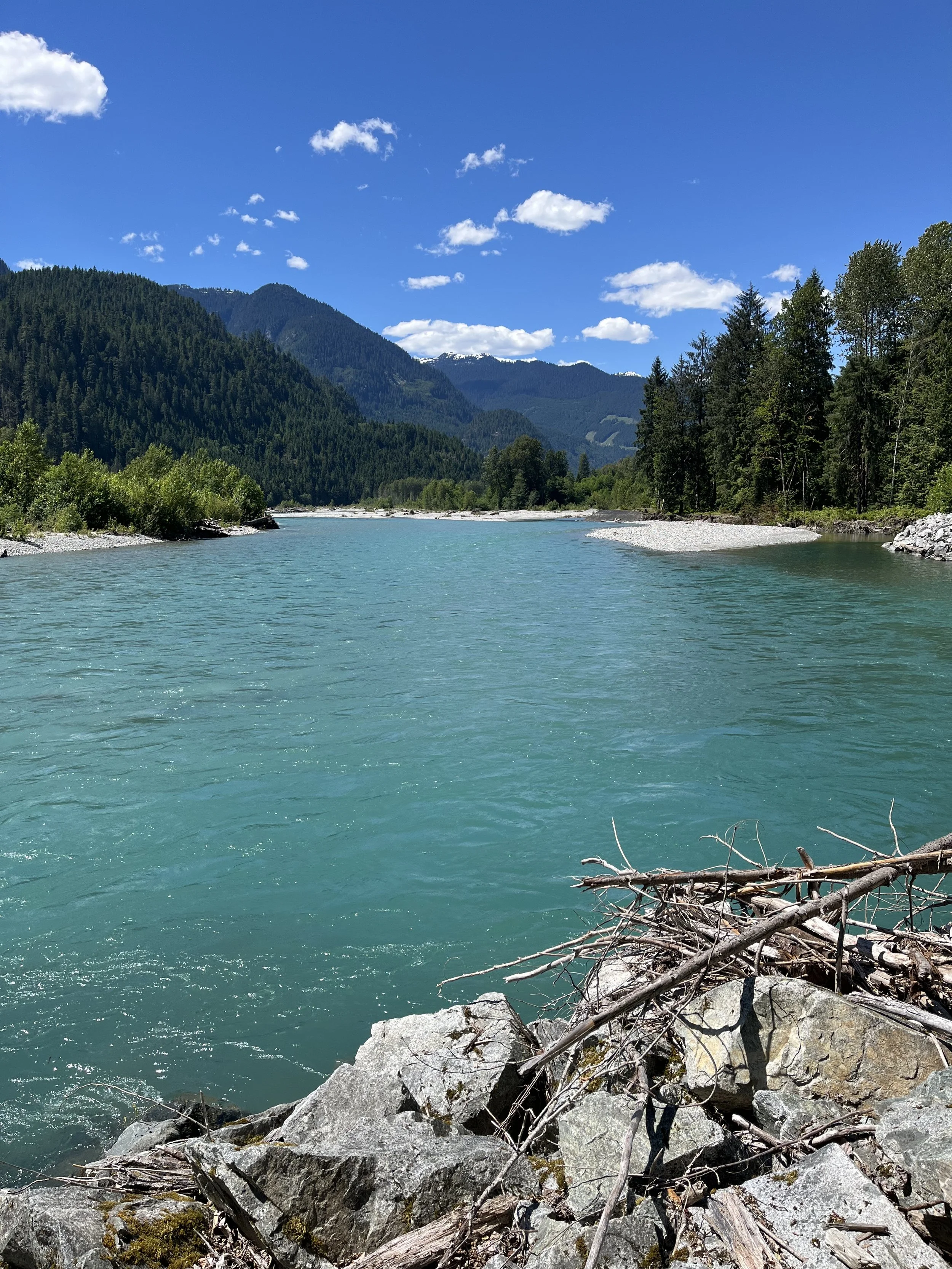
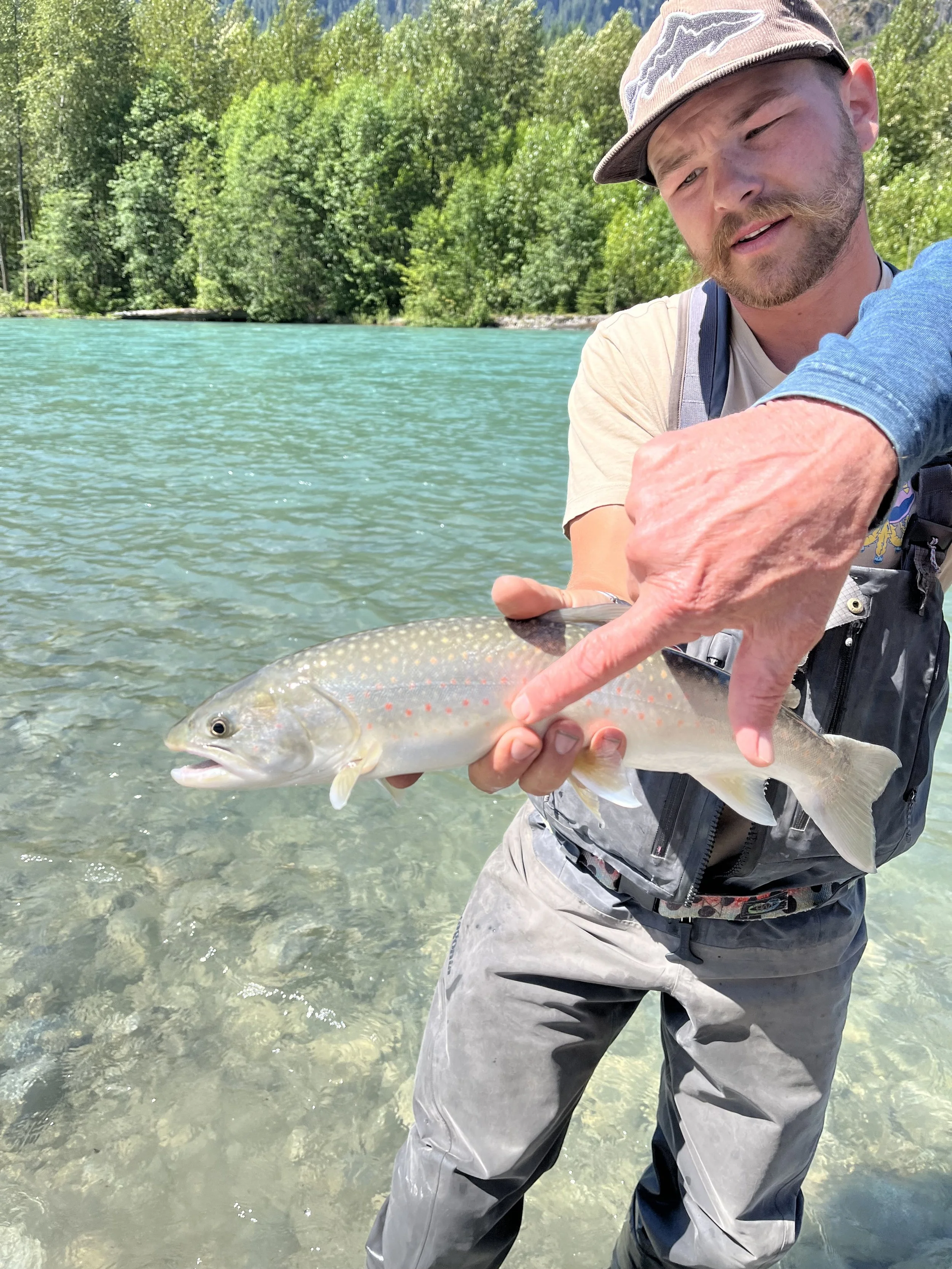
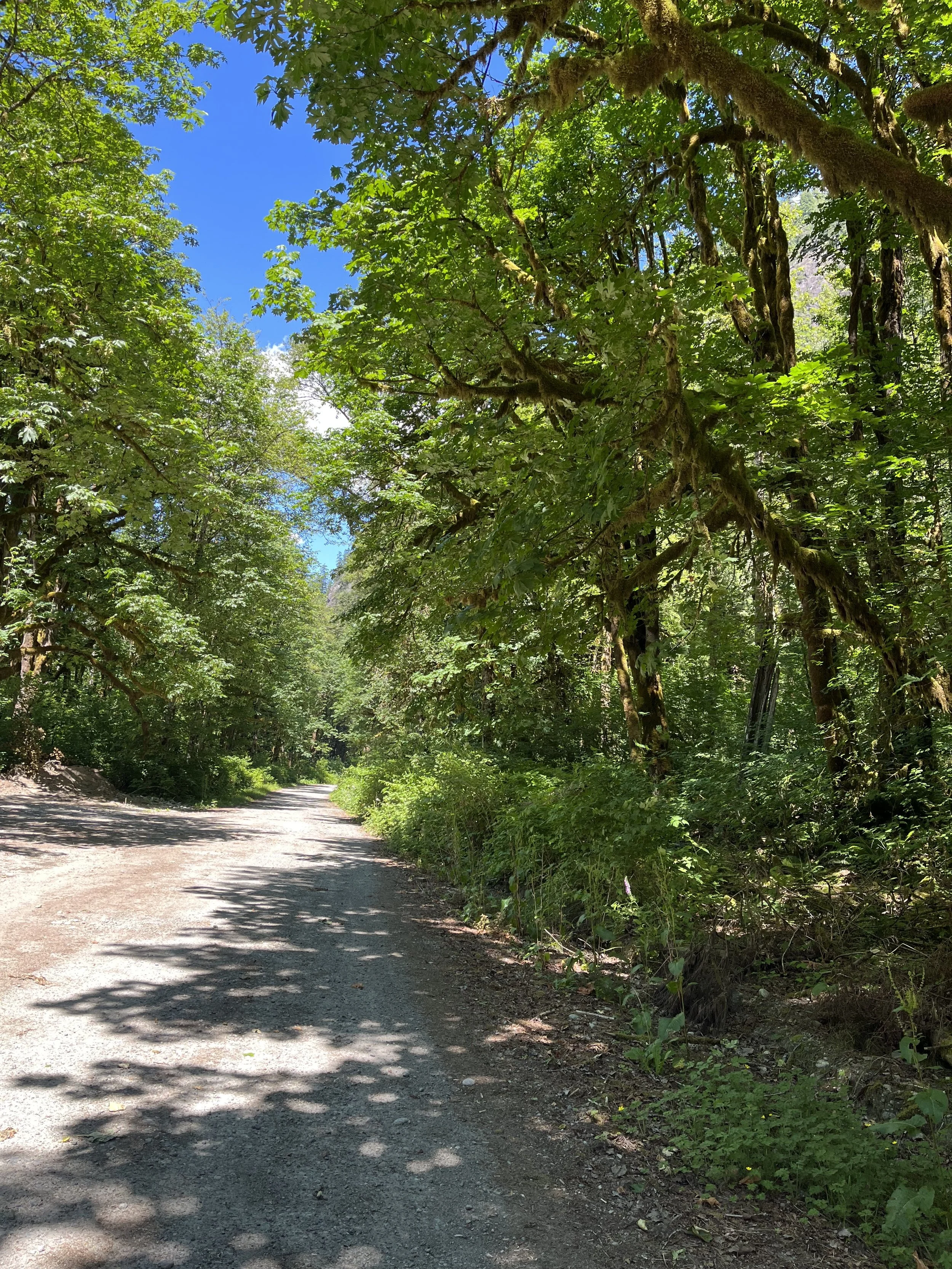
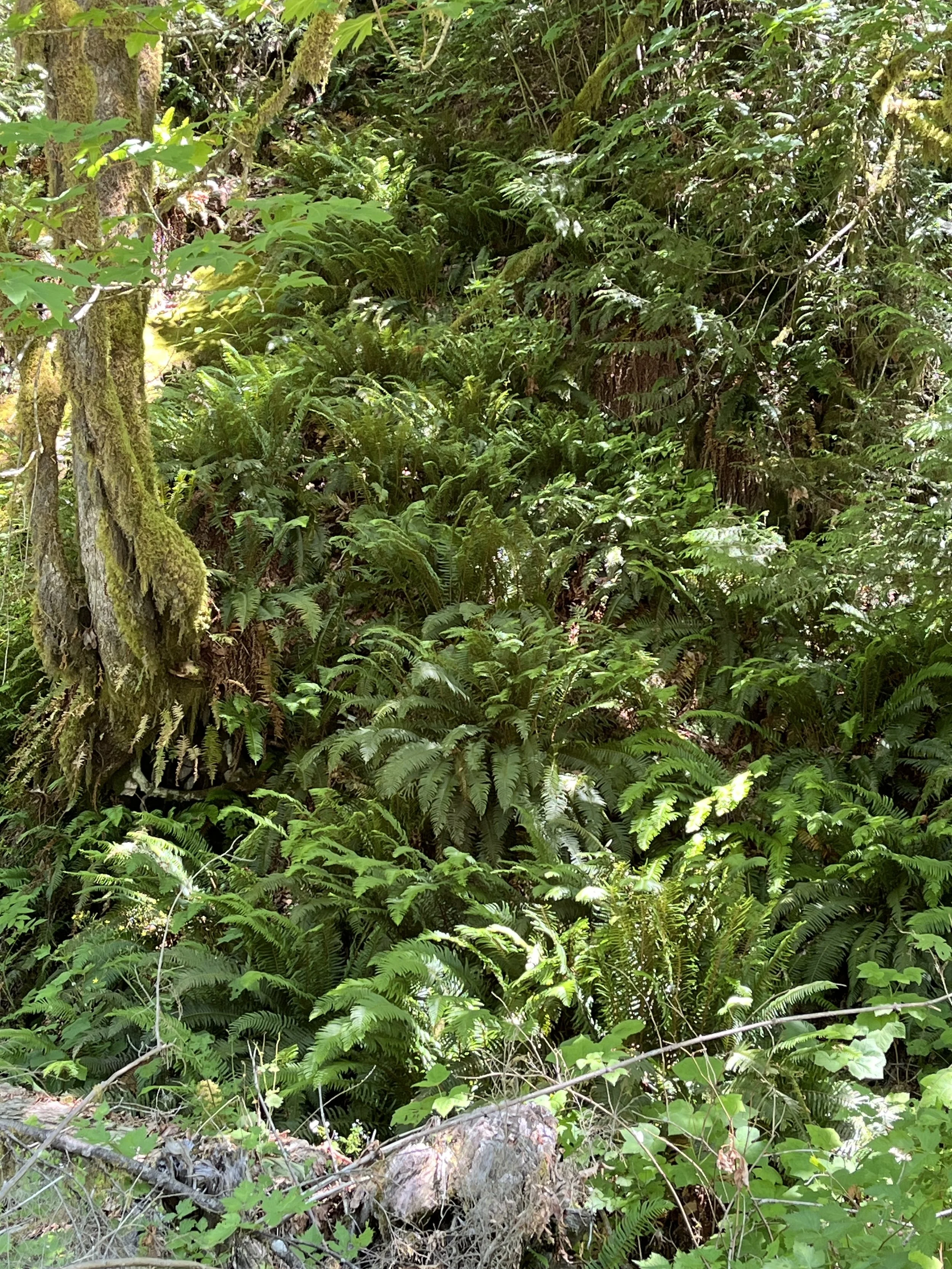
At that point the guest disembark and walk across a funky ramp to where the truck/vehicle awaits. The ramp has fallen apart – though the lodge owner was making repairs – as the logging industry, which needed the ramp, has stopped, for now. The latest logging company has gone bankrupt. The area was heavily logged at the turn of the century, with large logging camps and the forest is largely second growth, impressive at that, very dense, as second growth tends to be. This is temperate rain forest. Maples, alder, Douglas fir, Cedar, ferns, moss, huckleberries, thimble berries, bear, wolves, elk, deer, all kinds of small mammals and birds. The river is glacial melt, that characteristic light green, cold, swift, not super deep, but swells, of course at the end of the winter season. However the glaciers are melting, so the future of this ecosystem is in doubt. Right now it hosts bull trout, salmon in spawning season, some sturgeon, but aside from these carnivorous fish, there is little life in the water, well that is not quite right, there are otters, pine martin, and fresh water seals too, but as far as bugs and other, very, very little. A carnivore’s waters.
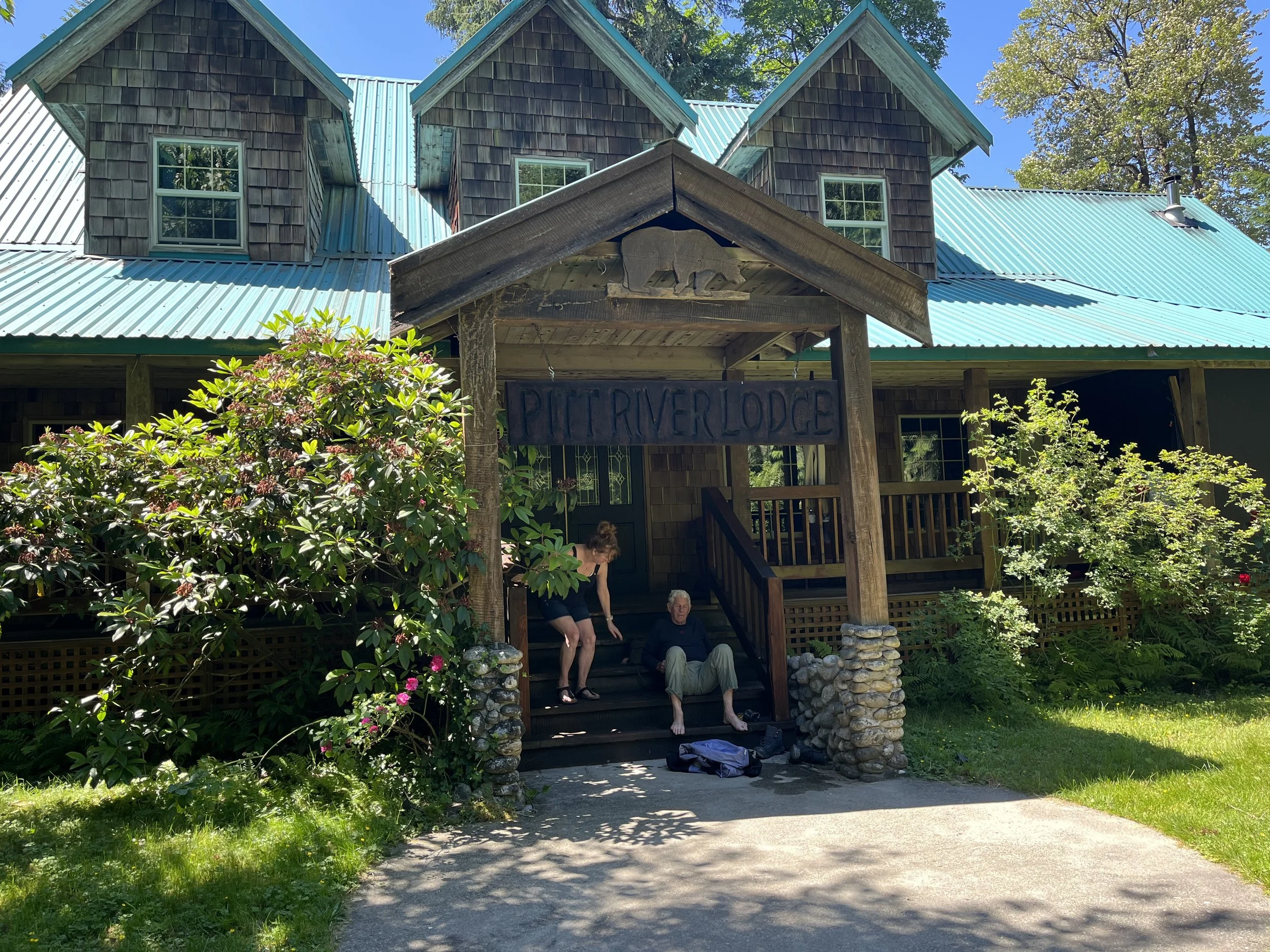
The Lodge was hand built by the owner, it was simple, clean, woodsy (all wood), with drop in plastic showers and Home Depot/Costco everything – faucets, sinks, personal cleaning products, sheets, towels, and also the food. So, clearly budget conscious, but not skimpy. It was clear that making a living is very hard. They provide guides that they pay, and feed, as well as Lodge in an adjacent cabin, they have several inflatable boats, lots and lots of fishing rods of many types, waders, boots, flies. All that is needed for the fisher person. No hunting, I think they did host hunting at one point. The Lodge is surrounded by other dwelling units in various states of disrepair, the owner and his companion’s house, the one where the helper from Cuba sleeps, the one where the father came, a couple of more that might have been in line for future renting out, and 2 buildings with kitchens for those who bring their own food and don’t want to stay in the Lodge. A great deal of infrastructure. There are solar panels + older style batteries and a HUGE generator, that is critical due to the amount of rain and the weather. The owners go to Cuba for 3 months Nov – March or so. Too hard to stay open all year, though they did at one point, and even have another lodge up the road, but they are having a hard time keeping open due to the personnel demands and low margins. And there are pick up trucks, SUVs, earth movers, big excavators kind of littered around.
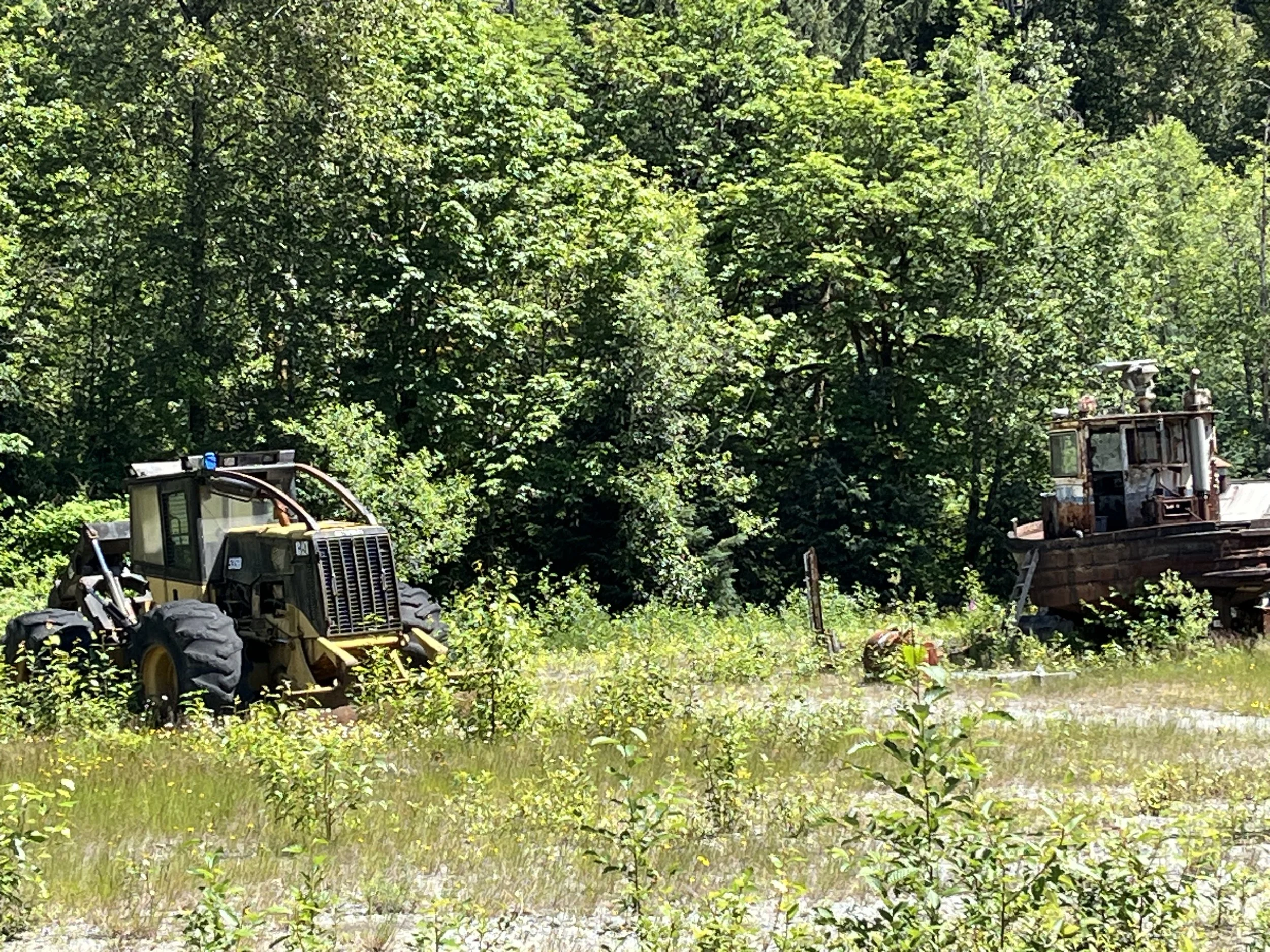
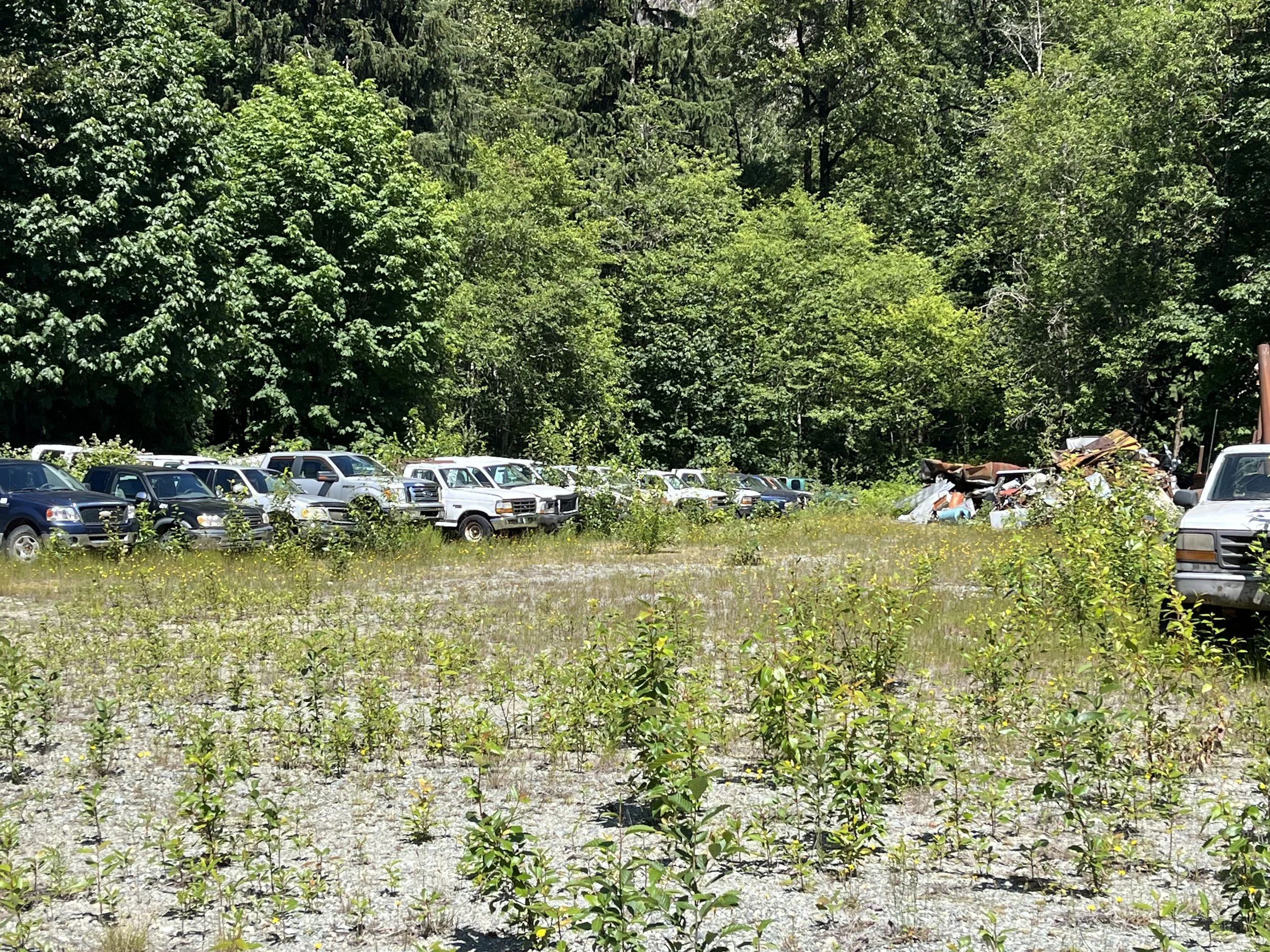
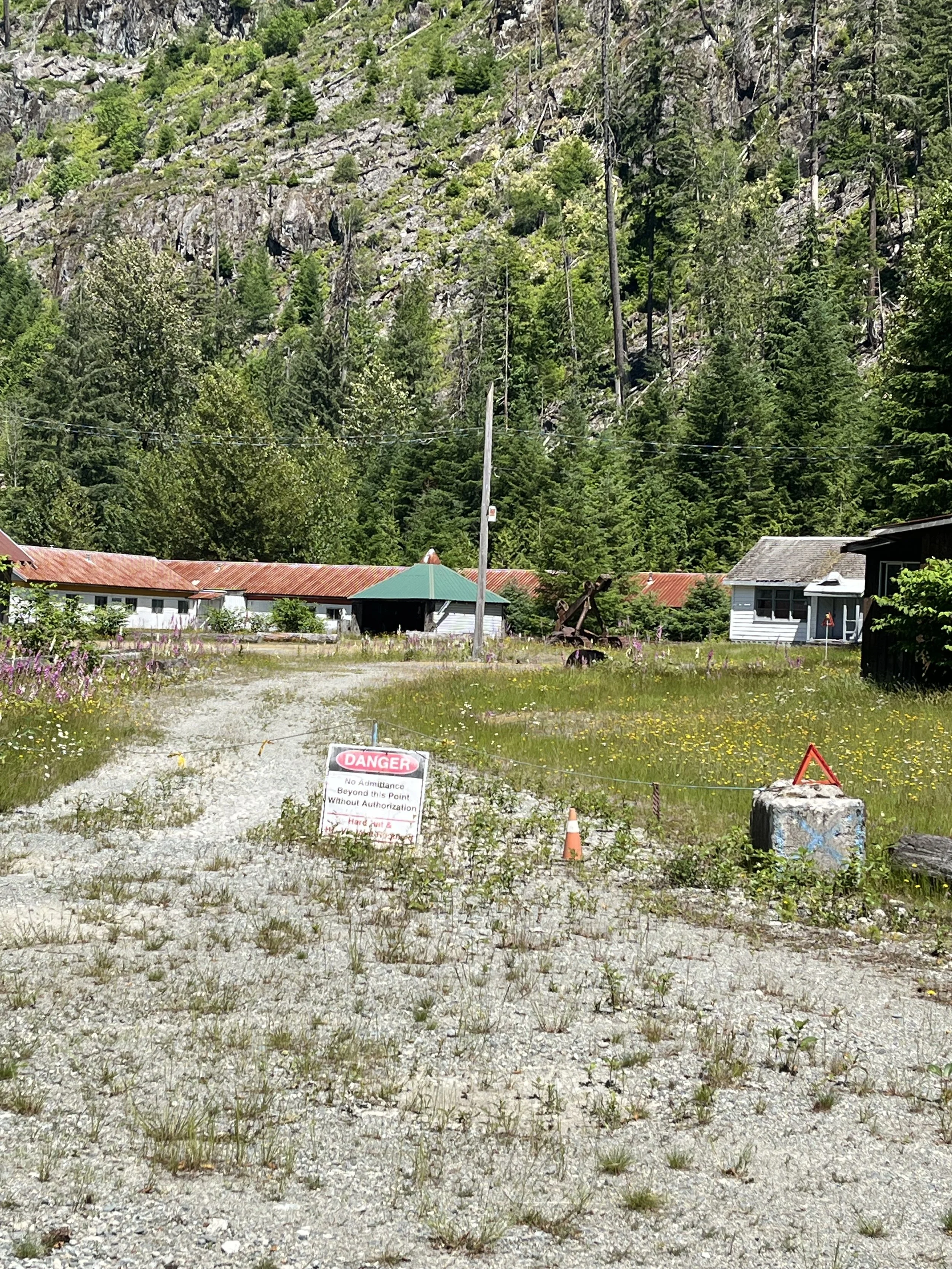
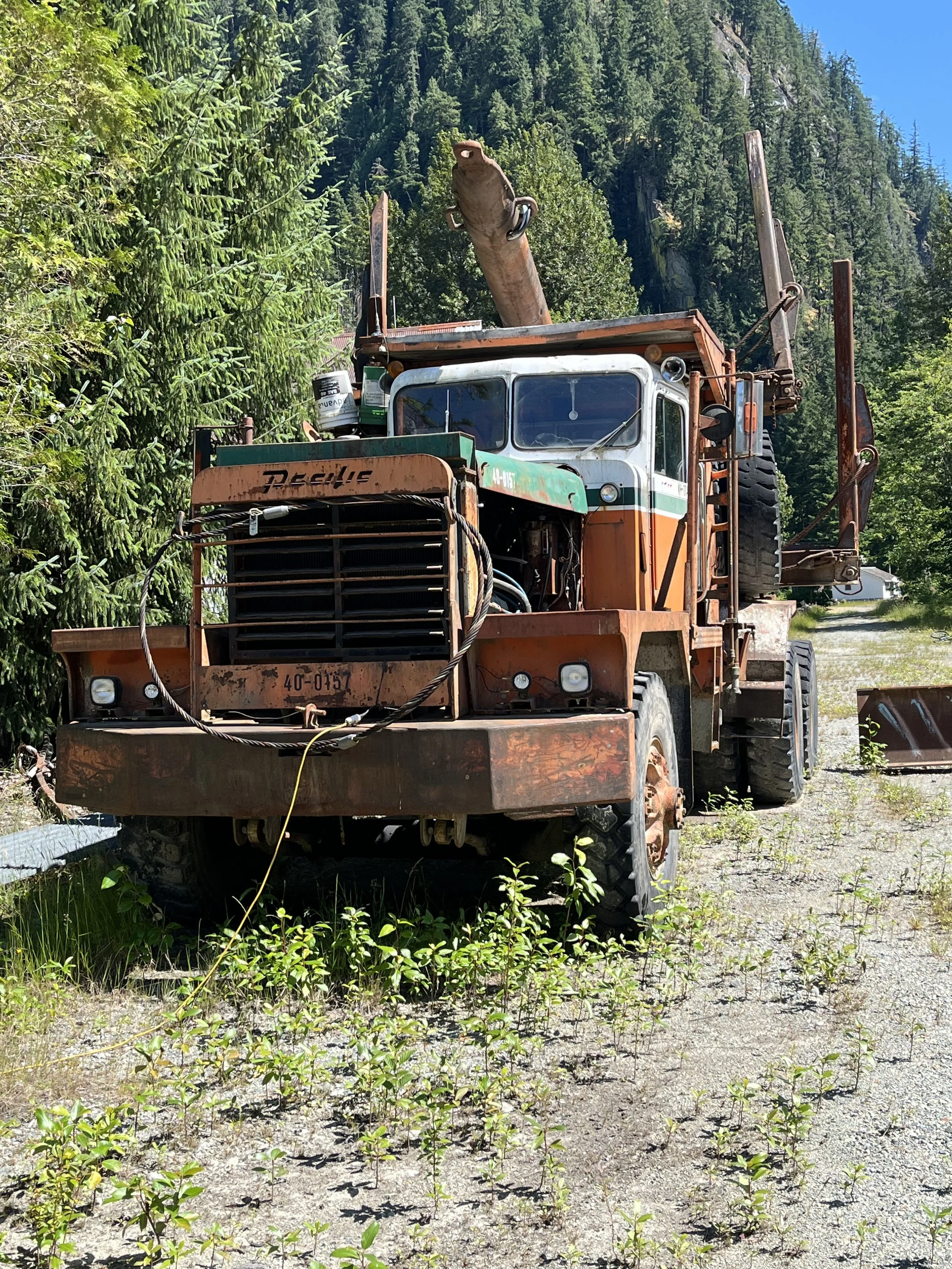
The logging camp is about a mile up the dirt road, the former logging road, now deteriorating because it hard and expensive to maintain – gravel needs to be ferried across the lake, then dumped into trucks to haul up the road, then it needs to be spread and tamped down. Everything and anything needs to be barged across, and the equipment left behind by the logging company is still extensive, though they took anything of real value out. At one point there were ~ 100 people in the camp, they had a garden, a pool, a school and a post office, but more recently the operation was more modest. But still, I counted about 40 abandoned pick up trucks, just in the ‘parking lot’. And there was more equipment too, not to mention the barracks. I watched a bear amble through. The intensity of fossil energy use is something to reckon with, they had to bring big tanks over with fuel for all the trucks and equipment, they had to bring so much, and ferry people back and forth constantly. Despite the apparent wildness of the place, humans, at least from the settlers on, really were disruptive.
We had an interesting dinner conversation at one point, a friend of the owners, a heavy equipment operator, was there to help with the road and other chores around, including transporting a kind of mulch to clean up a fossil fuel spill on the back of a trailer. They were talking about the retreat of the logging company and that that made life so much nicer as logging trucks would rumble down the road all day long and make for noise and a lot of dust. In fact, the Lodge owner was renowned for having successfully fought off a gravel mine up the river and other extractive activities, and was not in favor of logging at all. They all revered the second growth and the forest. At the same time, they were incensed at the Canadian government for having entered into agreements, signed by the Crown, to ‘give’ the land back to the ‘natives’ in Canada. They exclaimed that in their watershed, there was no evidence that the natives even ever were there or used that land. No artifacts, no villages, no nothing and thus were not entitled to any say, or certainly no more than them, yet they were now subject to native directives. . . the heavy equipment operator was particularly miffed as he had been making benches along the road for the cyclists who come up to go to the hot springs up the road, to enjoy the scenery and the natives told him he had no permission to do so, and to stop. The conversation went on and on. I had a front seat to hear grievances and, likely fears. These settlers were 2nd and 3rd generation working people, people who worked on and with the land, who were deeply attached to the place and had fought to keep it freer of exploitation, but here they were, having to ‘obey’ the natives who were not really as implicated in the place as they, or so they felt. It was poignant and sad, and to overcome these perceptions would be so much work, if even possible. They simply could not ‘see’ that this land had been lived in for probably several thousand years before they arrived and is First People land.